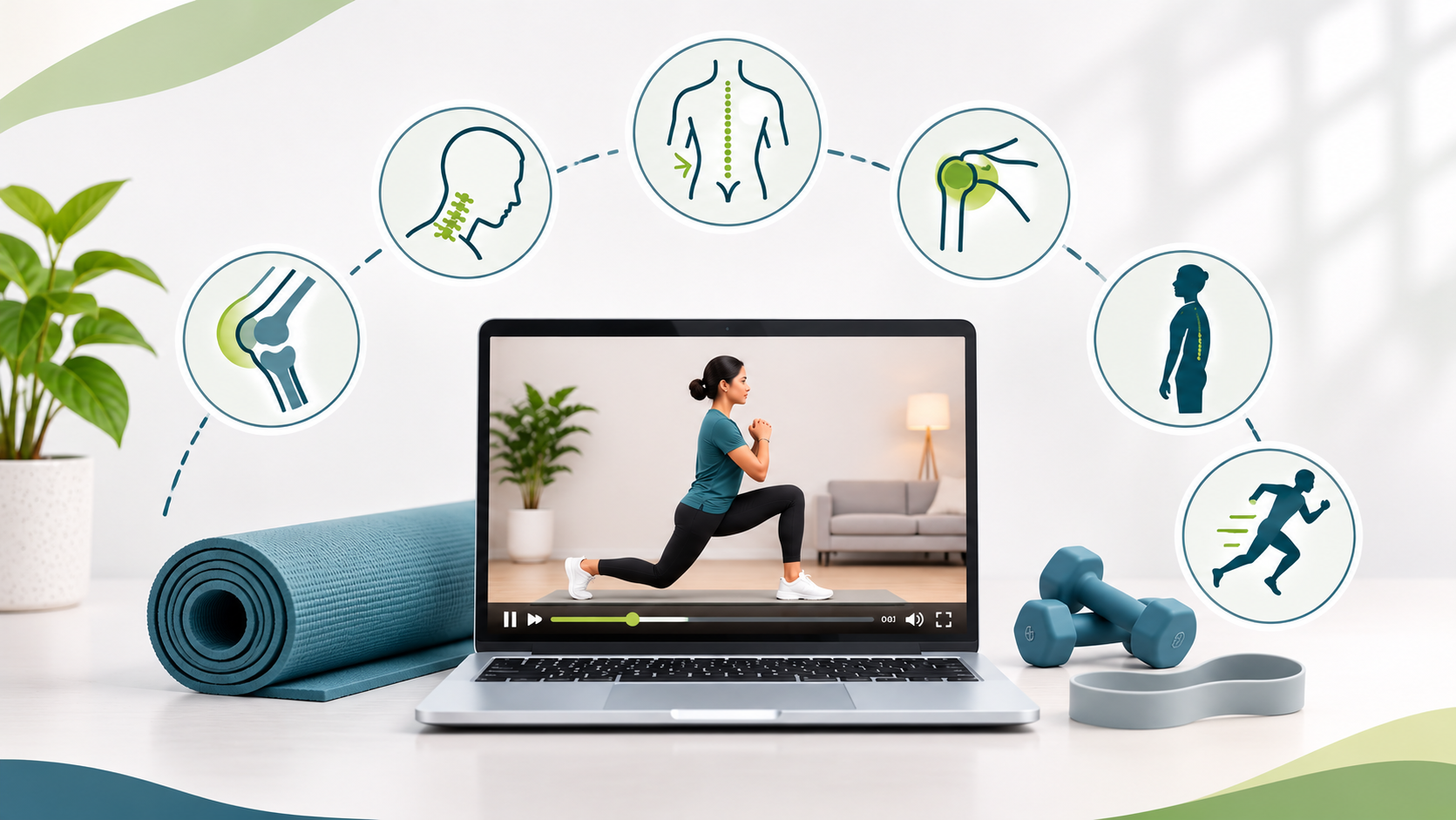
Pain, stiffness, reduced mobility, and difficulty performing everyday activities can significantly affect a person's ability to work, exercise, and enjoy daily life. Physiotherapy helps address these problems through systematic movement assessment, therapeutic exercise, patient education, and tailored rehabilitation.
However, visiting a physical clinic is not always convenient. Travel demands, busy work schedules, geographical distance from specialized healthcare facilities, and mobility constraints can make regular in-person appointments challenging.
Online physiotherapy offers a reliable alternative for receiving high-quality clinical guidance. Through secure video consultations, patients can discuss their symptoms, receive real-time movement guidance, follow individualized exercise programmes, and monitor their progress alongside a qualified physiotherapist.
Although telephysiotherapy is not suitable for every condition or patient, it serves as a highly practical solution for selected musculoskeletal, sports-related, postural, and neurological rehabilitation needs. Let's explore the conditions that benefit most from this digital approach.
1. Lower Back and Neck Pain
Lower back and neck pain represent the most common musculoskeletal complaints globally. These issues frequently develop due to prolonged sitting, repetitive movement patterns, reduced physical activity, muscle deconditioning, minor soft-tissue strains, or underlying postural stress.
How can online physiotherapy help?
For suitable patients, a physiotherapist utilizes a live video consultation to:
- Understand the exact location, duration, severity, and behavior of the pain.
- Review daily activities, ergonomic workstation setup, and movement habits.
- Observe movement limits during bending, rotation, and functional tasks.
- Guide targeted spinal mobility, core stabilization, and motor control exercises.
- Explain activity modification strategies to relieve immediate strain and build long-term tolerance.
- Monitor progressive improvements in spinal range of motion during follow-up sessions.
For instance, an individual with uncomplicated lower back discomfort related to desk work can achieve substantial relief through structured movement breaks and active conditioning. Similarly, neck pain patients receive clear instruction on cervical mobility and ergonomic alignment.
2. Knee and Shoulder Conditions
The knee and shoulder are load-bearing and highly mobile joints crucial for walking, lifting, reaching, and athletic activities. Conditions such as knee osteoarthritis, patellofemoral pain, shoulder impingement, and overuse tendinopathies often restrict daily function.
| Joint Region | Targeted Condition | Virtual Rehabilitation Focus |
|---|---|---|
| Knee Joint | Osteoarthritis / Patellofemoral Pain | Quadriceps strengthening, lower-limb alignment, and functional sit-to-stand training. |
| Shoulder Complex | Uncomplicated Discomfort / Overuse | Rotator cuff strengthening, scapular stabilization, and progressive overhead mobility. |
Virtual therapy allows the clinician to observe functional tasks like squatting or overhead reaching, guide precise exercise execution, and adjust load variables based on patient tolerance.
3. Postural Problems
Extended computer usage and sedentary routines frequently lead to complaints regarding posture and muscle fatigue. Common visual patterns include forward head posture, rounded shoulders, increased thoracic kyphosis, and reduced postural endurance.
During a session, your clinician reviews screen setup, observes sitting habits, demonstrates thoracic mobility drills, and prescribes targeted strengthening for the upper back and neck flexors.
4. Sports Injuries
Athletic endeavors place intense physical demands on muscles, tendons, and ligaments. Repetitive strain or sudden changes in training volume can lead to muscle tears, ankle sprains, or tendinopathies.
- Sub-Acute Muscle Strains: Guided progressive loading and mobility work.
- Ankle Sprains: Proprioceptive, balance, and joint stability retraining.
- Tendinopathy Management: Load management education and isometric/isotonic strengthening schedules.
While online consultations effectively manage exercise progression, a full return-to-sport clearance requires comprehensive multi-planar functional testing.
5. Selected Neurological Rehabilitation Needs
Neurological conditions such as Stroke or Parkinson's disease impact balance, motor control, and coordination. For carefully selected individuals with adequate home support, telerehabilitation provides vital continuity of care through guided mobility drills, balance maintenance routines, and functional task practice.
Why Choose Online Physiotherapy?
- Convenience: Complete structured rehabilitation sessions from the comfort of home.
- Direct Rehabilitation Guidance: Bridges geographical barriers for patients in remote regions.
- Individualized Exercise Prescriptions: Programs tailored specifically to your daily capacity and physical goals.
- Continuous Progress Tracking: Regular check-ins maintain exercise compliance and track functional recovery.
Frequently Asked Questions
| Question | Clinical Answer |
|---|---|
| Can online physiotherapy help lower back pain? | Yes. Selected patients with uncomplicated lower back pain benefit significantly from virtual assessment, education, core conditioning, and progressive monitoring. |
| Can shoulder pain be managed online? | Uncomplicated shoulder conditions respond well to virtual exercise instruction, though complex or severe traumatic presentations require hands-on clinical evaluation. |
| Is special equipment required? | Generally, a smartphone or computer with a working camera, a stable internet connection, and sufficient space to perform movements are all that you need. |
Ready to Restore Your Movement?
Book your assessment with PhysioCare, one of the trusted online physiotherapy platforms designed to bring expert clinical rehabilitation straight to your home.
Book Your Online Assessment